
 Image 1 of 1
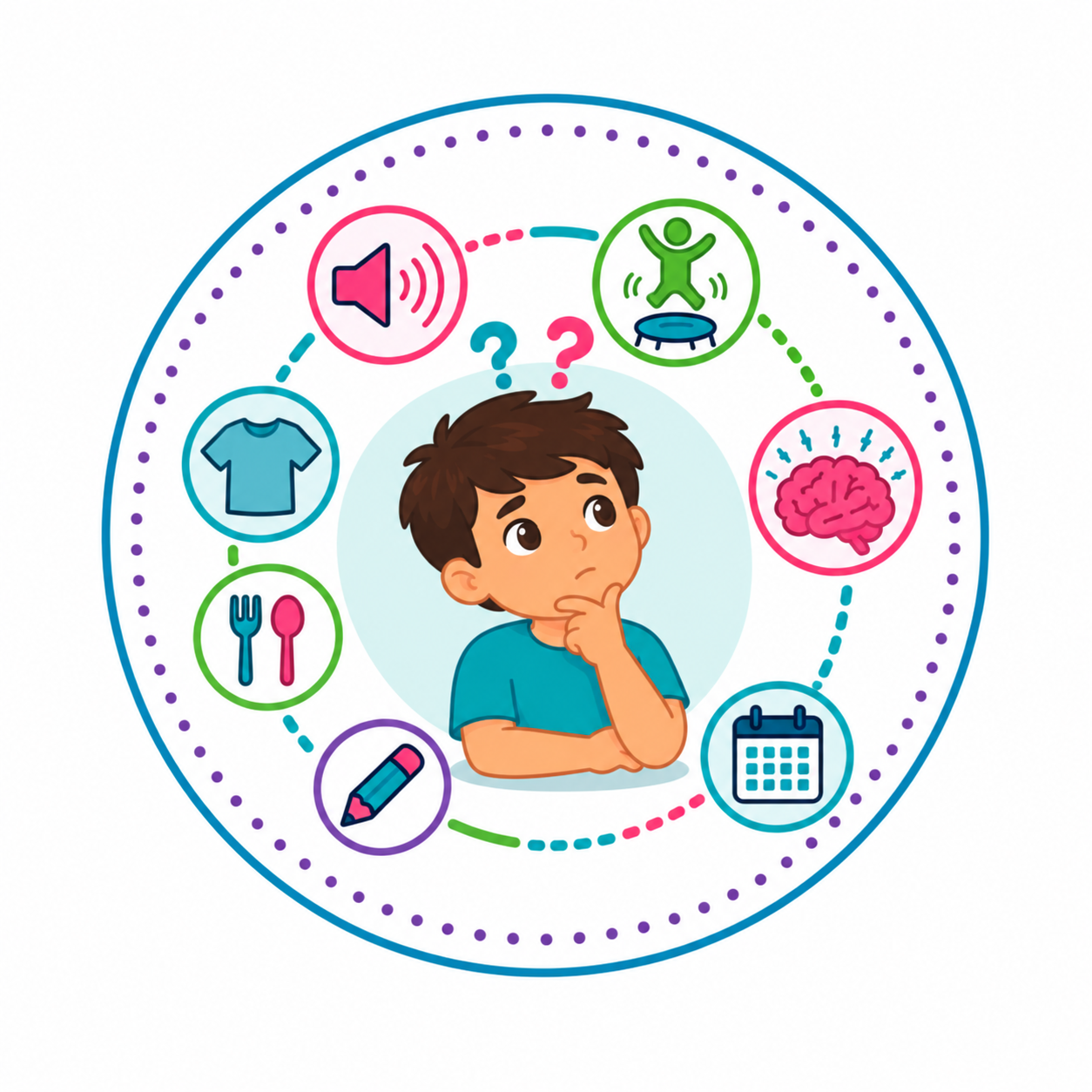
Children who benefit from Sensory Integration Occupational Therapy may:
Become overwhelmed by loud noises
Avoid certain clothing textures
Be extremely selective with foods
Constantly seek movement or deep pressure
Have difficulty sitting still
Frequently trip, bump into things, or appear clumsy
Have difficulty recognizing hunger, thirst, or bathroom needs
Become overwhelmed during transitions
Experience frequent emotional dysregulation
Avoid grooming activities like hair brushing or nail trimming
Have difficulty participating in school routines
Struggle with fine motor tasks such as handwriting or using scissors
Become distressed in busy or unpredictable environments
Every child is different, and sensory experiences exist on a spectrum.
Children who benefit from Sensory Integration Occupational Therapy may:
Become overwhelmed by loud noises
Avoid certain clothing textures
Be extremely selective with foods
Constantly seek movement or deep pressure
Have difficulty sitting still
Frequently trip, bump into things, or appear clumsy
Have difficulty recognizing hunger, thirst, or bathroom needs
Become overwhelmed during transitions
Experience frequent emotional dysregulation
Avoid grooming activities like hair brushing or nail trimming
Have difficulty participating in school routines
Struggle with fine motor tasks such as handwriting or using scissors
Become distressed in busy or unpredictable environments
Every child is different, and sensory experiences exist on a spectrum.